The following essay was first published in Dark Discoveries magazine.
I. Introduction
There were, in such voyages, incalculable local dangers; as well as that shocking final peril which gibbers unmentionably outside the ordered universe, where no dreams reach; that last amorphous blight of nethermost confusion which blasphemes and bubbles at the centre of all infinity—the boundless daemon-sultan Azathoth, whose name no lips dare speak aloud, and who gnaws hungrily in inconceivable, unlighted chambers beyond time amidst the muffled, maddening beating of vile drums and the thin, monotonous whine of accursed flutes; to which detestable pounding and piping dance slowly, awkwardly, and absurdly the gigantic ultimate gods, the blind, voiceless, tenebrous, mindless Other Gods whose soul and messenger is the crawling chaos Nyarlathotep.
It is this quote, from H.P. Lovecraft’s The Dream-Quest of Unknown Kadath, that perhaps best encapsulates the soul of the Lovecraftian ethos. The world is a dark and foreboding place and those who would search for light do so at their own folly. For in the end, there is no dawn. There is only the yawning chasm, the swirling chaos, the black seas of infinity. The gods, if gods there be, care nothing for man. They are neither good nor evil. They are simply forces of nature, as interested in the fate of man as the tides or the winds. To say that they see mankind as nothing but an insect is to overstate our importance in the grand scheme of things. The Great Old Ones are no more aware of us than a gamma ray burst would be as it scoured the earth clean of life.
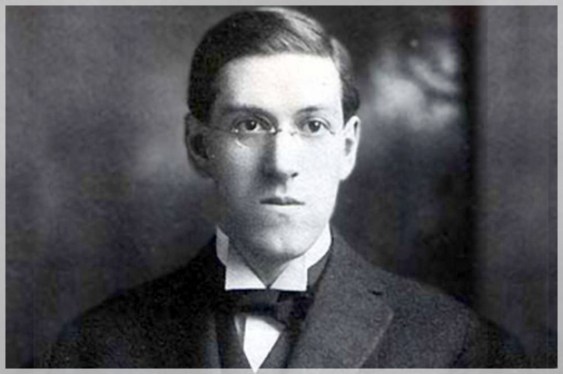
That’s the conventional wisdom at least, shared by Lovecratian scholars, fans of speculative fiction, and the writers who have sought to follow in Lovecraft’s footsteps.
But does it have to be that way? Is the only end of Lovecraft nihilism? Or is there room for hope? The answer to these questions will ultimately determine whether Lovecraftian fiction remains a niche area of fascination to true believers, populated with pastiche and fan fiction, or whether Lovecraft will take his place as the father of a true sub-genre of horror and, indeed, all of literature.
II. Respect for Lovecraft, Not Obedience to Him
In 1925, Florence Stoker won a lawsuit she had filed against the producers of an obscure movie who had failed to secure the appropriate rights to her late husband’s most famous work—Dracula. The judgment was severe. Stoker had demanded nothing less than the destruction of all prints of the film. The movie’s name?
Nosferatu.
No one knows for sure why Bram Stoker’s widow was so zealous in her crusade against Nosferatu. Perhaps she disagreed with the changes made to the original story. Maybe she wanted more money than the film company was willing to pay. Or perhaps she simply thought of film as an inferior form of art—a low-brow, uncultured medium that was not worthy of her late husband’s genius.
But in the end, her reasoning is not as important as what would have happened if she had succeeded with carrying out the court’s decree.[1] Dracula has become a timeless classic of immense and enduring influence. But that fate was in no way preordained. At the time Nosferatu was filmed, Dracula was not exactly a best seller. In fact, Stoker and his widow were quite poor in the final years of the great author’s life, forced to rely on public charity just to get by. It was only after Nosferatu and subsequent stage adaptations of Dracula became popular that the novel began to approach the iconic status it now enjoys.
But it wasn’t just popularity that Nosferatu bestowed upon Dracula. It also made one key alteration, one that varied quite a bit from the source material, one that changed vampires forever.
It made sunlight deadly to the creatures of the night.[2]
From Nosferatu followed countless more adaptations, sequels, re-imaginings, and homages. Some good, some bad, but all hearkening back to the source material, even if in only the most cursory of ways. Meanwhile, vampires became iconic to the point of over-saturation. There are a number of horror publications today that will not accept vampire fiction on the principle that nothing new is left to be written.[3]
There’s a lesson there for those of us who write Lovecraftian fiction. We have to be willing to step out from the shadow of the master. That has proven to be easier said than done. Lovecraft’s work strikes a deep chord within many, and a—dare I say it—cult-like devotion has grown up around not only his works, but his legacy. Far too often, arguments over what direction the so-called “new weird” should take seem to devolve into a sort of “What Would Lovecraft Do” shouting match. This tendency goes all the way back to August Derleth, the man who did more than perhaps anyone to preserve and promote Lovecraft’s work.
Derleth was a creative mind in his own right, and in what he dubbed the “Cthulhu Mythos” he found a muse for his fiction. But Derleth wasn’t content to use Lovecraft as a jumping off point. Whether because of a lack of confidence in his own artistic direction or honest but misguided belief, Derleth set out to prove that Lovecraft’s philosophy was, in fact, a reflection of his own more Christian-centric worldview.[4] This effort manifested itself in a number of ways, perhaps most lastingly his division of the Lovecraftian cosmology between the good Elder Gods and the evil Old Ones.
But not everyone agreed with Derleth’s approach, and his widespread influence would eventually result in a significant backlash—led by eminent Lovecraft scholar S.T. Joshi—known as “anti-Derlethism.” This school of literary criticism attempted to separate Derleth’s inventions from Lovecraft’s original conception and restore a purer understanding of Lovecraft’s works. A noble goal, but now the pendulum may have swung back too far in the other direction. The status quo today seems to be that anyone who deviates from the dogma of Lovecraft is guilty of Derlethism.
If this all seems absurd to the casual observer, well, it is. The purity of the mythos has become, for some, an almost religious obsession, with heretics and apostates and their works worthy of burning at the literary stake.[5] Thus, for many in the Lovecraftian community, fiction that contains hints of religion, or hope, or even the possibility of ultimate success for the human protagonists, is anathema. Authors who portray the Great Old Ones—who are, to remind you, more than willing to wipe mankind from the face of the earth—as “the bad guys” are guilty of engaging in a naive and simplistic good vs. evil fairy tale.
To all this sophistry, I say enough.
III. Making Our Way in the Shadow of Lovecraft
It’s time for Lovecraftian fiction to blossom into maturity, to grow up if you will. It’s time for writers of weird fiction to step beyond what came before and make our own way. Tales of mind-shattering horror that inevitably lead to the protagonist’s death or commitment to the loony bin are all well and good. There’s room for them. They make great stories. But if Lovecraftian fiction can be only that, then we are drawing from a shallow well, indeed.
I honestly don’t think that is what Lovecraft would have wanted. I think he would have been far happier if those who came after him drew upon his inspiration to create worlds of their own. When I wrote my first novel, That Which Should Not Be, my goal was two-fold. I wanted to write a piece of weird fiction that was true to the old masters of horror while doing something different. And I wanted to inspire a new generation to read Lovecraft and experience his mastery.
I attempted to accomplish those goals by first creating a Gothic, traditionally themed horror novel with an emphasis on Lovecraftian fiction. I then went on to treat the mythos as if it were another of the great religious traditions. Finally, I sought to explore how legends, religions, and myths might be a way for the human mind to conceptualize the Great Old Ones, their fall, and the prophecies of their return.
I knew there would be readers, particularly hardcore fans of Lovecraft, who wouldn’t like that approach at all. Yet I was surprised at how knee-jerk some of the reactions were. For instance, there is a part in my book where one of the protagonists stumbles upon the symbol of the cross as a defense against one of his supernatural enemies. Some critics reacted to this as if That Which Should Not Be was a Christian apologetic.
I think, had they not been so eager to defend Lovecraft’s legacy, they might have approached the issue with more circumspection. As I noted, one of the driving principles of the novel is that there is truth in every legend, every myth. Lovecraft fans who objected to the power of the cruciform might be shocked to learn that the cross as a symbol of power predates Christianity and indeed is present in nearly every culture. The ankh of ancient Egypt was the ultimate symbol of life. We see the cross in Eastern and Aryan religions, and archaeologists regularly find Bronze Age objects (and even bones) engraved with the cross. Lovecraft talks about certain signs and sigils that were used to keep the Old Ones at bay. Why not a cross?[6]
I hope That Which Should Not Be has encouraged people to look up the works of the old master, the gentleman of Providence, and see where the legend of Cthulhu, the Necronomicon, and Nyarlathotep first came into the world. And I hope that H.P. Lovecraft would have enjoyed my book.
But while I care a lot about the former, the latter doesn’t really concern me. I don’t need Lovecraft’s blessing, just as Lovecraft doesn’t need me or anyone else to defend him. That, in my view, is the difference between serious literature that borrows from the past without stealing from it and fan-fiction that remains a slave to whatever artistic well it draws from. Too often, we in the Lovecraftian community have allowed our deep and abiding respect for the man who inspired us to strangle the very creative voice we found in his works.
Every writer wants to be fearless, to write free of external restraints. Horror writers are the most fearless of all. For us, there is no line we will not cross, no boundary we will not stretch, no taboo too…taboo. And yet we find ourselves bound by the memory of a man who has been dead for 80 years.
IV. Lovecraft, Reanimated
But are we right about Lovecraft? Up until this point, we have assumed the conventional wisdom is true, that Lovecraft’s protagonists were always doomed to an unhappy ending. That humanity is helpless in the face of deities beyond imagination. But are things so black and white?
Not really.
Now it’s true, of course, that Lovecraft has his share of tragic heroes. Harley Warren is dead, and there’s always a window to jump out of at the end of every story. But the Lovecraftian world is hardly one of endless darkness, even if, at times it is hard to see the light.
These days, the typical Lovecraftian novel or short story follows a predictable path. Group goes into the woods. Group finds Lovecraftian evil. They attempt to fight back. Lovecraftian evil laughs at them before killing the ones it wants to kill and releasing the rest. The horror.
But even the darkest Lovecraftian story also raises some interesting questions. Why is this evil limited to the woods? Why hasn’t it taken over the world? Does it just not want to? Is there something holding it back, something that it fears? And if there is, who is to say we can’t harness that power?
Is man insignificant? Of course he is. But he is not so insignificant that he cannot do great things. When Wilbur Whateley sought to open the gate and bring forth the old rulers of the world in Dunwich, it was “three men from Arkham – old, white-bearded Dr. Armitage, stocky, iron-grey Professor Rice, and lean, youngish Dr. Morgan” who stopped him.[7] We cannot be sure what dark gods Erich Zann battled with the power of his “screaming viol”—though I have my own suspicions—but battle them he did. And then there’s Lovecraft’s magnum opus, the story that more than any other has seared his name into the public consciousness—“The Call of Cthulhu.” There was nothing all that special about Johansen, the Norwegian sailor who, in the company of his fellows, stumbled upon the nightmare city of R’lyeh and Great Cthulhu entombed within. But whether driven by fear or madness or bravery or simply a fool’s hope, it was Johansen who turned his ship and faced the thing from beyond the stars head-on, driving him back to the chamber whence he had emerged, and, I suppose, saving the world from the return of the Old Ones in the process.
To be sure, these victories were not without a price, and a heavy one at that. Whether death or the loss of a friend or a broken mind, no one stands against the crawling chaos without sacrifice. But they also do not stand without hope.
V. Hope and Lovecraft
There is one story of Lovecraft’s in particular that had a profound effect on me and my views of the mythos. It is called The Haunter of the Dark.
It’s not that Lovecraft’s protagonist Robert Blake is able to defeat the “avatar of Nyarlathotep.” In the end, he was doomed from the moment he entered that ancient church in the heart of Providence. Indeed, the three-lobed burning eye consumes all.
But Blake is not the hero of The Haunter of the Dark. At least, not in my view. The hero—or heroes I should say—have no name. They are the people of Federal Hill who, despite the crushing weight of endless millennia worth of superstition and fear, stood against the coming of the night. Those ordinary men and women who “clustered round the church in the rain with lighted candles and lamps somehow shielded with folded paper and umbrellas—a guard of light to save the city from the nightmare that stalks in darkness.”
In the end that darkness was too strong for Blake, and the spirit of Nyarlathotep could not be defeated. But this much also cannot be denied. Nyarlathotep, the crawling chaos who has stood at the throne of Azathoth, was not oblivious to mankind, nor did he see those who gathered around the Church of the Starry Wisdom on that black night as mere insects ready to be squashed.
No, Nyarlathotep feared them, just as the darkness must always fear the light.
The light gives darkness its power. Without that light, darkness has no meaning. In the same way, it is the tension between the opposing forces of hope and hopelessness in Lovecraft’s fiction that drive the horror contained therein. It is Gilman slipping through the clutches of old Keziah, only to have revenge visited upon him by Brown Jenkin. It is the clicking on the other end of the line as Randolph Carter screams through the telephone for his friend Harley Warren to answer him, only to have another voice return his call. It is Danforth and Dyer fleeing from madness, only to cast one last glance back, like Lot’s wife of old. It is Robert Olmstead escaping Innsmouth, only to discover that he can never escape the mirror.
It is this tension between opposing forces of hope and hopelessness that makes Lovecraft’s many works not only incisive statements on humanity, but also terrifying tales of fantasy. When we read or talk about Lovecraft, we focus so intently on the mind-shattering madness of many of his endings that we miss the story itself. Hope is there, even if it is misguided, even if it is betrayed. And if hope is indeed critical to Lovecraft’s ethos, then there is no reason that a Lovecraftian story cannot have a happy ending, no reason that hope cannot win the day and banish the night. Surely, Lovecraft himself did not often let hope achieve such a victory, but his mythos does not preclude such an outcome, and it is reductive and disserving to the man himself to insist that it does.
I think there’s a reason that we’ve yet to see a breakthrough Lovecraftian novel.[8] We’ve been too constrained, too limited, too afraid. I would challenge my fellow Lovecraftians to break free, to do something they may have never tried to do before—write a mythos tale that at least has the chance of a happy ending, even if you rip it away at the last moment. Give some hope to mankind. It’s not as easy as you might think. And it can make for a much better story.
After all, we can reconcile ourselves to our fate, to the inevitability of our deaths. But hope? A chance to escape from horror? To burst from a Stygian underground night into the bright daylight of morning? A chance that, at any moment, might be snuffed out?
In the end, that my friends is the scariest thing of all.
Notes:
[1] While Mrs. Stoker won the court case, she eventually lost the war. Although a large number of prints were destroyed, enough eventually surfaced to allow Nosferatu to become the hugely influential horror masterpiece that we all know so well.
[2] That sunlight kills vampires has become so ingrained in our popular consciousness that subsequent adaptations of Dracula have either been forced to follow Nosferatu’s lead or explain why the eponymous character is able to walk in the daylight. I remember criticizing Twilight for having vampires sparkle in the sunlight instead of bursting into flames. Imagine my surprise upon finally reading the original Dracula and discovering that, indeed, Stephanie Meyer had been closer to the truth than I.
[3] Absurd in my view, but difficult to dispute on the merits.
[4] S.T. Joshi lays out an excellent analysis of Derlethism in his review of A Look Behind the Derleth Mythos: Origins of the Cthulhu Mythos by John D. Haefele, available at http://www.stjoshi.org/review_haefele.html.
[5] This is ironic, given that Lovecraft is a favorite amongst atheists and agnostics.
[6] As a matter of fact…
In another instant, however, matters were reversed; for those murderous claws had locked themselves tightly around his own throat, while the wrinkled face was twisted with insane fury. He felt the chain of the cheap crucifix grinding into his neck, and in his peril wondered how the sight of the object itself would affect the evil creature. Her strength was altogether superhuman, but as she continued her choking he reached feebly in his shirt and drew out the metal symbol, snapping the chain and pulling it free.
At sight of the device the witch seemed struck with panic, and her grip relaxed long enough to give Gilman a chance to break it entirely.
–“The Dreams in the Witch House” by H.P. Lovecraft
[7] Joshi has said that he considers “The Dunwich Horror” an “aesthetic mistake on Lovecraft’s part,” primarily because of its depiction of good vs evil in mankind’s struggle to stave off the return of the Old Ones. While I admire Joshi deeply—it was his Call of Cthulhu and Other Weird Tales that sparked my own personal love affair with Lovecraft—on this point he seems to have a bit of confirmation bias.
[8] I hope the authors of many of the wonderful Lovecraftian novels out there will not take offense to this claim. That great Lovecraftian fiction of all kinds exists cannot be denied, and I think it goes without saying that we are living in the golden age of the genre. Novels like John Hornor Jacobs’s Southern Gods, William Holloway’s Immortal Body and The Song of the Death God, and the short fiction of Laird Barron are as good as anything we have seen. But the work that takes Lovecraft mainstream? The one that makes its mark on literary history? That, I think, we are still waiting on.
 Periodically, the Internet pops out a “10 Best Horror Movies on Netflix Right Now” list. That’s where I found Nightworld. A Bulgarian production, I was intrigued by the presence of Freddie Kruger and that door with all the tentacles on it. What could go wrong?
 Beyond the Gates attempts to be the best VHS-based horror movie since Samara crawled out of a television set. And this low-budget flick may well grasp that brass ring, if for no other reason than, to my knowledge, there are no other VHS-based horror movies.
 I had been circling Gemma Files’
 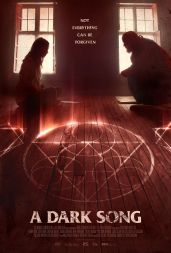 What would you do to have one last moment with the ones you love and have lost? What would you give up? Would you risk your life? Would you risk your soul? That’s the question at the heart of A Dark Song.
 2.
2.  3.
3. 

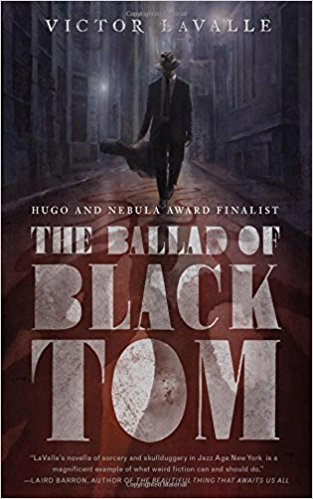 Although some in the horror community struggle to admit it, Lovecraft, for all his brilliance, was also a racist. I’ve written about it
 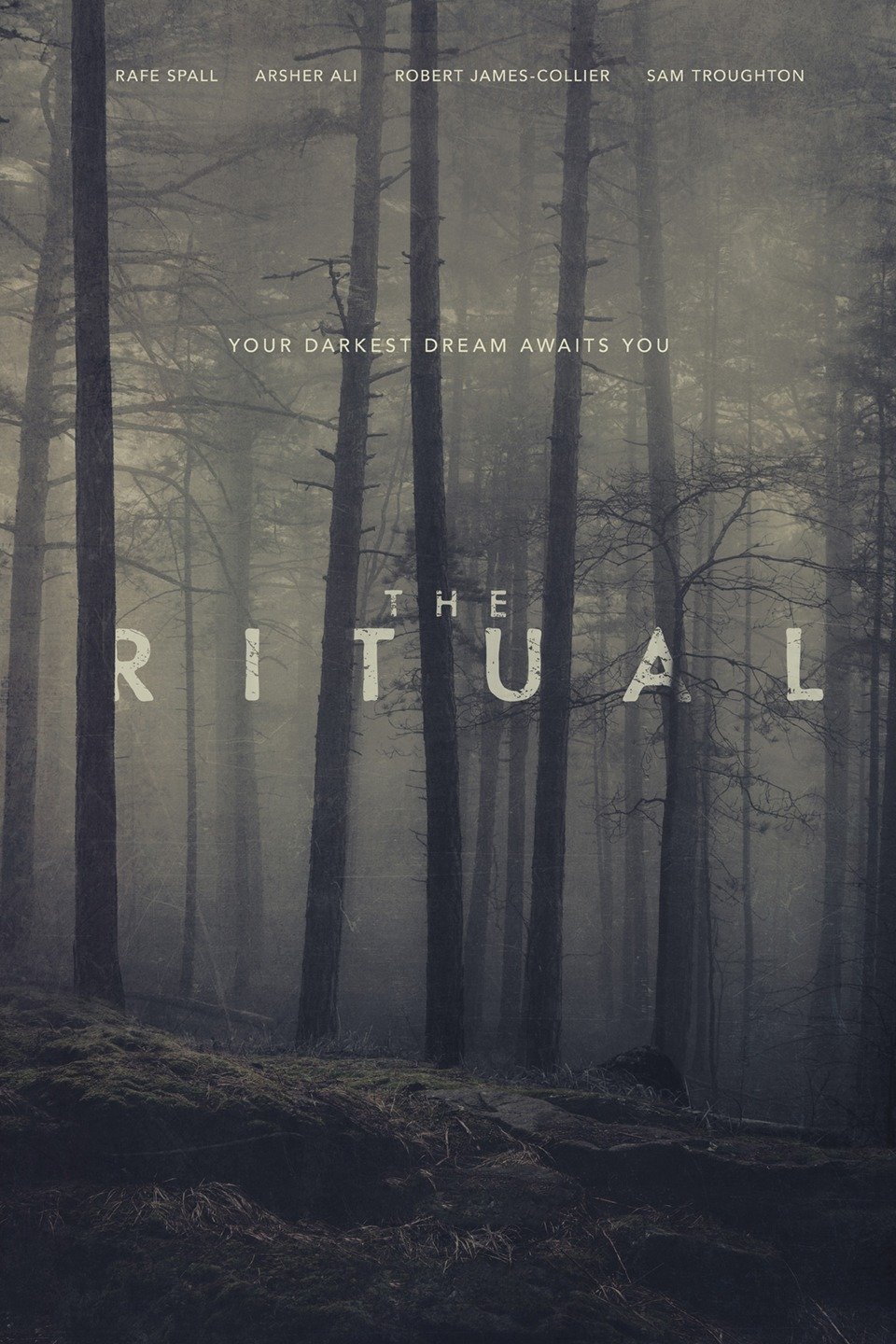 Horror is having its [latest] moment, and the availability of mediums like Amazon and Netflix mean that horror movies which might have disappeared into straight-to-video oblivion ten years ago have a chance to shine today. But The Ritual is a coup for Netflix. This is a movie good enough to go to theaters, and it is can’t miss for anyone with a Netflix account.
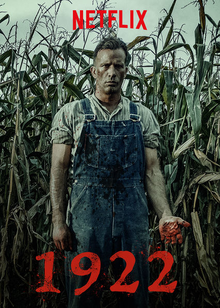 the adaptations of his novellas/short stories have been remarkably successful. Stand by Me, Shawshank, Children of the Corn, 1408, just to name a few. So I went into 1922 with a lot of optimism, particularly given that it is a Netflix special. Was I disappointed?
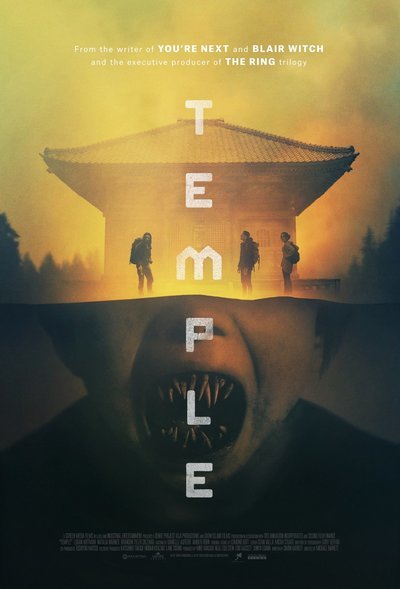 The Temple treads well-worn territory. Three young Americans head off to mysterious foreign lands (in this case, Japan) and are soon messing with things they don’t understand. After numerous warnings to leave well enough alone, they strike off to visit the forbidden temple where a bunch of people have died. When things get wonky, they end up spending the night. Bad idea. You know where this is going, and there isn’t going to be a twist.


 Beware The Shadows