Why yes, yes I did. 
Category Archives: Uncategorized
Free Music Friday–Ain’t No Grave by The Johnny Cash Project
I know I’ve posted this before, but I am posting it again. A truly remarkable tribute to Johnny Cash. Watch the video from the beginning to see the whole story, and go to The Johnny Cash Project to see the latest update of the project. But however you do it, watch it.
Filed under Uncategorized
The Immortal Body by William Holloway–Five Stars
 When I set out to write That Which Should Not Be, one of the reasons I decided to include so many Lovecraftian themes was out of my own sense of disappointment in modern Lovecraftian fare. There just wasn’t a lot of it that was any good. So I wanted to write some that was. Now, we can quibble over whether or not I succeeded, but I think we can all agree that while vampires and werewolves and witches have all had their day, Lovecraft and the world he created has been sorely neglected. Since I’ve written the book, I have come across some really good Lovecraftian novels, including John Hornor Jacobs Southern Gods, J.G. Faherty’s Burning Times, and Laird Barron’s The Croning. But the best one yet is The Immortal Body, by William Holloway.
Here’s the description from the book jacket:
Detective John Mitchell thought he understood murder. But that all changes when monsters are born during a faith healing at a local church.
Psychic Medium Sarah Lynn Beauchamp thought she understood the dead, but the dead have a new plan for her.
SAS veteran Dr. Menard thought the War was through with him until an unspeakable evil returns from the depths of a forgotten time.
Behind it all, a mysterious figure lurks, controlling the actors from the shadows, ushering an end to reason, sanity and the world as we know it.
Pretty creepy huh? One of the problems with Lovecraftian fiction is that it is often insular; it’s hard for outsiders to break in. The Immortal Body doesn’t have that problem. It’s a murder mystery, a supernatural thriller, and a weird tales epic all rolled into one. The story is also relentless–it’s not for the faint of heart, and it sets the tone immediately that anything, no matter how horrible, can happen in this world. In fact, the more horrible the better.
Does it have some weaknesses? Minor ones, I assure you. At one point, it gets a little talky, but sometimes exposition is needed in this type of book so you can figure out what in the world is going on. Secondly, it’s part of a series, so the story isn’t finished when the last page turns. This is a journey, and you are going to have to stay with it to find out the answers you seek. Fortunately, the writing is good enough that you are going to want to be there till the end.
All in all, a great book that I recommend without hesitation to anyone that can handles some pretty hardcore violence and adult language. But be warned–you might just find it harder to sleep at night once you see the world through the eyes of the immortal body!
5 Stars
Filed under Uncategorized
Buzzfeed Just Changed My Life–How To Really Play Monopoly
This Buzzfeed article is incredible. (To give credit where it’s due, this article originally ran on Critical Miss). In short, you’ve all been playing Monopoly wrong, and it’s probably why you hate it. To quote,

Auction!?!?! Mind…blown…
Filed under Uncategorized
An Interview with Graeme Reynolds, Author of the Brilliant High Moor Series
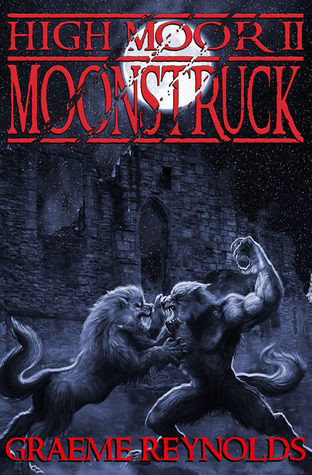 As anyone who follows this blog knows, I was a huge fan of both High Moor and High Moor 2: Moonstruck. Graeme Reynolds, the author of the series, graciously agreed to sit down for an interview with yours truly. Enjoy, and buy the books!
1. Tell us a little bit about High Moor 2: Moonstruck, the follow-up to the brilliant and critically acclaimed High Moor.
Moonstruck follows straight on from the events of the first novel, which I’m sure that my readers will be glad about, given that I left things on a bit of a cliff-hanger. John, the protagonist of the first novel is in police custody after the climax of High Moor, and the pack can’t let this happen, in case he transforms in a cell and reveals their secret to the world. I’ve tried to keep the same blend of explosive action, involved plot along with a sprinkling of dark humor that went down so well with the original story. I’ve just taken it up a couple of notches. Moonstruck is a much darker novel than it’s predecessor, that’s for sure.
2. High Moor 2 pulls no punches, and I am not sure all writers would have been brave enough to write some of the awesome—but brutal—scenes that you paint in the book. Were you ever concerned about going too far?
The simple answer to that one is yes. There is one scene in particular in Moonstruck that I agonized over whether to keep it as it was. I’m sure that there will be some readers that get to that part and then stop reading, however the flip side is that it delivers one hell of an emotional impact to the reader. It was a difficult scene to write, but really drives the second half of the book forward. At the end of the day, people who read horror novels expect a certain amount of actual horror, and mostly having werewolves as protagonists meant that I needed to be careful not to slip into urban fantasy territory. As it stands, while the scenes in Moonstruck can be quite harrowing at times, they are integral to the plot. I’ve tried to make the novel more than just a one-note gore fest. And I don’t think that anyone who reads “That Scene” will forget it in a hurry.
3. So you are coming off the runaway success of High Moor. Am I correct to say that was a self-published effort?
Yes, although the decision to self-publish was not taken lightly. I’d heard so many horror stories about some traditional publishers over the years that I’d investigated doing it, but hadn’t made up my mind until I watched a panel at a convention in 2011, where a well-known editor and a well-known agent shouted down anyone who dared to disagree with their view that all self-published work was garbage. Their attitudes made my mind up for me, and I decided to publish High Moor myself.
4. Self-publishing generally has a bad name, but High Moor has been roundly praised and was short-listed for the Horror Writers Association’s Bram Stoker Award. How did you get people to give your book a chance?
The most important part was to make sure that the book was as good as I could make it. That meant doing all of the things that traditional publishers do – paying a professional editor and cover designer being the most important. A lot of people say that they can’t afford to do it, and so try to skip those steps which is basically where self-published work gets its bad name. Having a quality product helped separate it from the hundreds of first drafts that tend to get submitted online. I also created my own imprint and bought my own ISBN’s, which again made it look like something that had been professionally produced. Of course, even after I’d made the book as good as I could, I was still taken by surprise at how well the novel was received by readers. Getting as far as I did in the Stokers, especially with a self-published, first novel, was amazing.
5. Why werewolves?
I’ve always loved werewolves. I remember having a book of monsters as a child, and the picture of the werewolf scared me so much that I had to flick past the page, but would then steal a look anyway (and then have nightmares that night). Then, when I was around the age of the kids in the first book, there were reports of something slaughtering sheep in nearby fields. Not only killing them, but tearing them apart, night after night. In the UK, we don’t have any predators bigger than a badger, so you can imagine how that turned into something more sinister in the mind of an imaginative child. Those imaginings are what eventually became the first High Moor novel.
6. What scares you?
I’m not a fan of spiders, ever since I woke up as a child one morning and found the crushed remains of a really big one in the bed with me (where had that BEEN during the night? WTF had it been DOING??). Heights also make me pretty nervous, and I do worry about gangs of feral teenagers with no moral values whatsoever breaking into my house and going all Clockwork Orange on me and my other half, which stems, oddly enough from a gang of feral kids beating me senseless and carving me up with a knife when I was 12 years old.
But then, the other day, while crawling around in the deepest, darkest part of my attic, I realized that there is one thing above all others that brings me out in a cold sweat and a barely contained wave of blind panic. Enclosed spaces.
There’s a long story that I won’t bore you with that basically involved me discovering this fear years ago while caving in my brief yet illustrious military career.
Ever since then, I can’t stand enclosed spaces or feeling trapped. When I watched The Descent it wasn’t the cannibalistic mutant cave dwellers that freaked me out. It was the bloody cave. Even large crowds of people can bring on a wave of panic that takes every inch of my willpower to fight.
Let’s just say that I’m one of the last people that you’d want to be trapped in an elevator with, and leave it at that.
7. Do you have any literary influences that shaped High Moor?
Actually, one of the reasons I started writing the High Moor series is that I struggled to find the sort of werewolf fiction that I wanted to read. A lot of my initial influences were cinematic, rather than literary. The Howling, American Werewolf in London, and Dog Soldiers were probably the most obvious ones, although the portrayal of werewolves as pack animals from Robert McCammon’s brilliant The Wolf’s Hour also had a pretty substantial influence on me. I tried to come up with my own version of the werewolf, one that incorporated most of the popular myths while giving things my own little twist. I also love the idea that good and evil can often be little more than a point of view and I’ve really pushed that idea in the new book. Another influence, not so much in terms of subject matter, but in writing style, was Jonathan Maberry’s Joe Ledger novels. Those books tear along at an incredible pace, and I decided that I really wanted to do the same thing with the High Moor books. It’s all very well to take time to draw a breath, but I really wanted to set a blistering pace that has the reader tearing through the book, eager to find out what happens next. The literary equivalent of watching a box set of 24, if you like.
8. Do you have a favorite book?
I do, but strangely enough my two favorite books aren’t horror. Top of the list by an absolute mile is Robert McCammon’s A Boys Life. No one else has ever managed to really describe the magic and joy of childhood in quite the same way, let alone merge it with a complex horror / fantasy plot. In terms of horror novels, my favorites really have to be Brian Lumley’s Necroscope series. The mixture of cold war spy novel, psychics and vampires blew me away the first time I read it, and once I read Necroscope 3, which brought space / time wormholes and vampire homeworlds into the mix, I was hooked.
9. What’s next? Are you going to continue to build on the world of High Moor, or do you want to do something completely different?
The High Moor series was always intended to be a trilogy, so I’ll be writing High Moor 3 next. After that, I’m going to write an apocalyptic novel that I’ve been mulling over for a couple of years, which is tentatively called “Pulse”. The basic idea is that a huge solar flare takes out everything electrical on the planet, but most of the population are still alive afterwards. At least until the food and water start running out. I’ve always had a worry that we’ve become too reliant on our current infrastructure and skills our grandparents had have been lost, so I really want to explore that. That one’s going to be a year or more down the road, though. After that, who knows? I’ve already plotted a High Moor spin off novel, but I’m going to take a break from Werewolves for a little while.
10. Where can folks find you and follow your work?
I should post more frequently to my blog, but am intending to make more of an effort in the future. I’m also not that active on Twitter. Really, Facebook is where I spend most of my time. Like I say, though, I am intending to spend a little more time on my blog and other social networks in the future. Feel free to pop by and say hello. I don’t bite. Often.
https://www.facebook.com/graeme.reynolds2
https://www.facebook.com/HighMoorNovel
@graemereynolds
Filed under Uncategorized
Music Genres, or, How Baby Boomers Froze Culture
So I was listening to DC 100.3’s countdown of the “500 Greatest Songs of All Time.” Being a rock station, this was of course limited to classic rock. I could complain about the horrendous ranking system (457. Me and Bobby McGee 350. Come Together 11. Life’s Been Good), but that’s not really what I’m interested in. What I want to talk about instead is the weird way we classify music.
It wasn’t always weird. There was a time it worked perfectly. Let’s use 1991 as our base year. In 1991, it was pretty easy to group music together. You had the Oldies, which was basically all rock and roll before 1962 or so and pretty much all of Motown. Classic Rock came from the 60s and 70s. Then there was 80s music which ran into the early 90s. And then there was this newfangled Alternative, with Nirvana, Smashing Pumpkins, Soundgarden, etc.
I submit to you that, in the last 22 years, nothing has changed. The Baby Boomers froze popular culture, at least when it came to music, in their own image.
Consider. Smells Like Teen Spirit came out in 1991. That’s 22 years ago (hard to believe, I know). 22 years before that, arguably the best song on the radio was Whole Lotta Love by Zeppelin. I can guarantee you two things. When the classic rock station did its Memorial Day countdown in 1991, Whole Lotta Love was on it, just as it was on this year’s countdown. But I can also promise you that Smells Like Teen Spirit was not on this year’s countdown, 22 years after its debut.
Why not?
Somehow, the way Baby Boomers view the musical world–broken down into the music that was popular when they were kids (oldies), the music that they came of age to (the classic rock of the 60s and 70s), the music that was popular during the height of their careers (the 80s), and the music their kids listened to (alternative) has simply become set in stone. Classic Rock stations have made some concessions to the passage of time–adding in a fair amount of 80s music and select groups like U2 and Metallica–but the music of the 90s and early 2000s is left without a real home. You hear it on campus radio stations. You hear it on stations that play current hits. But where is the 90s station? Why don’t Classic Rock stations play Nirvana and Smashing Pumpkins? I can only guess it is because Baby Boomers maintain a lock on radio listenership, and they do not want to hear alternative music mixed in with the music of their youth.
It’s no surprise that more and more of the younger generation are moving away from radio to services like Spotify. I just wonder if there will ever be a tipping point where things change. On any list of the 500 Greatest Rock songs of all time, Smells Like Teen Spirit should be near the top.
Certainly higher than Life’s Been Good.
Filed under Uncategorized
The End and Click — Great Short Films
I don’t watch a lot of indie stuff, but when Mike Davis over at the Lovecraft eZine recommends something, I go with it. Well, I didn’t go wrong with this nifty little indie film called The End. Check it out. At only 15 minutes long, it’s a fantastic ride.
And here is click. Less Lovecraftian, more creepy.
Filed under Uncategorized
Why I Hate Darius Rucker’s Cover Of Wagon Wheel
If you follow this blog, you probably know that I have a passion for music. Maybe it’s born of my complete lack of any musical talent or singing ability whatsoever. Or maybe I just have a good ear. I mean, I’m not bragging, but if you’ve bought any of the albums from my Free Music Friday’s, you are probably listening to some good tunes about now.
In any event, I usually like to save my opinions for the end of the post. But why waste time here? I despise Darius Rucker’s cover of “Wagon Wheel.”
Now, I do love me some Hootie. I mean, just watch this video. It’s Hootastic.
You see, Hootie and his Blowfish represented an entire sub-genre of 90s music. Just look at him jamming up there in his backwards hat. Hootie was a mainstream alternative band, the kind of artist that late-20s, early 30s types in 1996 could like and feel cool, feel like they were still young. They were an easy-listening version of Counting Crows. Less edgy, less mournful, safer. It was the kind of music that your mom would listen to with you. I mean, there are probably people who still think that “Let Her Cry” is the definitive musical statement on drug abuse.
And so, when Hootie turned up 10 years later on country music radio, was there anybody that was surprised?
Here’s Hootie in a cowboy hat.
See, country music has been growing in popularity and declining in quality for the last 25 years. Back in the old days, country music could stand toe-to-toe with rock when it came to musical inventiveness and lyrical genius. But pop is the virus that kills all genres, and it made its way into country at the turn of the 90s with a vengeance. Artists like Garth Brooks took country music to new heights, but those who followed him did it by stripping the genre of its soul. Gone were the lyrical genius and musical inventiveness of George Jones, Hank Williams, Conway Twitty, Loretta Lynn, and Emmylou Harris. In were bubblegum pop tunes with a country twang. Today, you have the empty, soulless ballads of bands like Lady Antebellum praised while the heartbreaking genius of groups like The Civil Wars are virtually ignored by country radio. I mean, compare these two songs, one a mega-hit by Lady Antebellum about bad, honey flavored whiskey and another by The Civil Wars about the heartbreak of bad, codependent relationships.
But I digress. The point is that if Darius Rucker was going to go anywhere to rebuild a career built on middle-age, middle-class, white folks from Georgia, country was the place to do it.
And I was fine with that. Good luck to Darius. I mean, it’s awesome to see an African-American face in country music. Shows how far we’ve come. But then he had to go and touch “Wagon Wheel.”
Now, for those of you who sadly do not know this, Darius Rucker didn’t write “Wagon Wheel.” The original version, based on a Bob Dylan riff (as all great music is), was released by Old Crow Medicine Show nearly a decade ago. Darius Rucker’s cover represents everything that is wrong in country music, all wrapped up in a five-and-a-half minute long package. Here they are, back to back. First, let’s watch Darius Rucker’s version.
And now, Old Crow Medicine Show.
Let’s compare. First, the music. Old Crow Medicine Show is up there with a stand-up bass, banjos, fiddles, the works. Darius Rucker sounds like he is singing in a karaoke bar in Tokyo. Or like he is performing a polka in Berlin. And then there is the video itself. OCMS eschews a literal interpretation of the song, with the guys walking down the street hitchhiking, and instead goes for a much more artistic and ultimately depressing, fairground motif. Basically the guys are playing the song at the most broke down, sad carnival you’ve ever seen. And to make matters worse, they are performing as part of some sort of go-go show. You can interpret that however you will, but I guarantee you that you can get pretty deep with the imagery.
Darius Rucker’s version starts off with him falling asleep, watching Duck Dynasty. I don’t know who made this artistic choice, but it is a perfect one. You see, Darius Rucker doesn’t live “Wagon Wheel.” There’s no rock bottom here, no performing in the worst possible venue. This is all a game for him, a fantasy. And the song mirrors that. This is an upbeat, dance song for Darius Rucker. Just look at the goofy grin on his face. The way the song rises in all the wrong places. How he never let’s the melody fall into the minor chord, how he refuses to let this be a soulful, almost mournful tune.
Cause that’s what it is. It’s a song of desperation, a song about a guy who’s down on his luck, just trying to make it to the next town, praying that another car stops to pick him up. A guy who just wants to get to Raleigh one last time and see the love of his life. And if the guys to whom he owes a fortune in poker debt he could never pay catch up with him there and kill him, at least he will die free.
Darius Rucker is hitch hiking his way to a show in a bar, and that’s before he wakes up on his tour bus with the cast of Duck Dynasty.
Actually, maybe Darius Rucker’s version is more depressing, after all.
Filed under Uncategorized
Limbus, Inc. is Here!
 If you follow this site, then you’ve heard the hype. You’ve seen the reviews. You know the endorsements. Now it’s time to read the book. Limbus, Inc. is finally available for purchase. Buy it here, and enjoy the ride.
Filed under Uncategorized
Listen To Jonathan Maberry Talk Limbus, Inc. With Publishers Weekly
Great pod cast interview with Jonathan and Publishers Weekly about Limbus, Inc. I think you’ll enjoy it quite a bit.
Filed under Uncategorized
More Photos From Chernobyl
The last post was such a hit that I am adding more photos from Chernobyl. These are from a guy named Dennis Eskins. He is a fellow urban explorer who both has a fantastic camera and better finishing techniques than I do. I think you’ll enjoy some of his wide shots. For even more pictures, check out this website. This guy was also on the expedition with us.


-

- The city really goes on forever.




Filed under Uncategorized
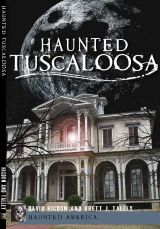
Haunted Tuscaloosa Featured on Paranormal Showcase!
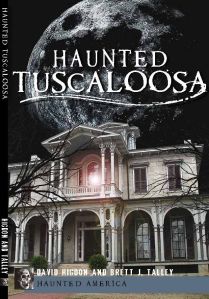 Haunted Tuscaloosa is a good bit different from my normal fare, but I am very proud of it nonetheless. If you like ghosts–or just the history of interesting places–you should check it out. Today, it is featured on Paranormal Showcase, a page that has a lot of interesting paranormal pages from across the web. Check it out here.
Filed under Uncategorized


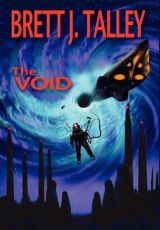
 Beware The Shadows