It’s not every day a new book comes into the world, but when it does, it needs your help to grow and thrive. I hope you’ll pick up my latest, The Abyssal Plain: The R’lyeh Cycle. I promise – – you won’t be disappointed. And don’t forget to leave a review!
They called it the Event.
The Event changed everything. The earthquakes came first, including the Big One, shattering the Pacific Rim and plunging the world into chaos. Then the seas came, the skies opened, and the never-ending rain began. But as bad as that was, there is something worse.
The Rising has begun.
A lone man who abandoned the world for his addictions searches a waterlogged Austin for something, anything to cling to. Little does he know that something else searches for him.
In the Sonoran Desert, the downtrodden of the world search for a better life north of the border, only to see the desert become an ocean: an ocean that takes life and gives death.
In the woods of Alabama, survivors escape to Fort Resistance, but soon discover that it isn’t just the horrors of the deep places of the world that they need to fear; but rather a new and more deadly pestilence that has grown in their own ranks.
In England, it’s too late to fight, and all that’s left is to survive. One man reaches for his own humanity, but what to do when humanity is an endangered species?
And in the Pacific, He is rising.
In The Abyssal Plain: The R’lyeh Cycle, authors William Holloway, Michelle Garza and Melissa Lason, Brett J. Talley, and Rich Hawkins have created a timely and uniquely modern reimagining of the Cthulhu Mythos.
Throughout the 1970s, Dario Argento produced a string of excellent films that helped cement Italy’s place on the horror map. Among the best of these movies was the 1977 film Suspiria. Building around a relatively simple and straight-forward story, Argento managed to create a moving canvas on which one stunning image after another was displayed. At times, the story takes a back seat to the shear artistry of the film, but unlike some movies that are all flash with no substance, Suspiria uses the vibrancy of the surroundings to draw us in to the world Argento creates and add to the mysterious and otherworldly nature of the events that we witness.
Suspiria tells the story of Suzy Bannion, a talented young ballerina who travels to Germany to perfect her craft at one of the most respected dance academies in the world. Arriving on a stormy night, she travels to the academy only to meet with a panicked young girl who flees from the building without explanation or any seeming cause. Suzy is later to learn that after leaving the young woman was murdered, and soon she beings to suspect that something sinister is taking place in the dead of night somewhere deep within the bowels of the academy.
Any discussion of Suspiria must begin with Argento’s exquisite use of color. Suspiria has to rank as one of the most beautiful movies ever filmed. The brightness of the images we witness helps to add to the fantasy like quality of the movie; it is simply difficult to imagine this kind of vibrant color in the real world. One can begin to predict when a murder is about to happen simply by looking at the set. When the colors fade, someone’s life is likely to vanish as well. It may seem as though I am overemphasizing a trivial aspect of the film, but a picture truly is worth a thousand words in this instance, and I highly recommend that even the most casual horror fan take a look at this movie. Adding to the brilliant visuals is a tremendous soundtrack by Goblin. A simple layered track echoes throughout the production and adds to the suspense of the proceedings while also emphasizing the mystical and dreamlike feel of much of the production.
Beyond being a work of film art, Suspiria is also a pretty good movie. Jessica Harper is in top form as Suzy and Alida Valli steals every scene she is in as Miss Tanner. Some of the other actors are less impressive, and provide wooden, forced performances. These instances, however, generally only involve characters with minor or brief roles, and are an annoyance at worst. The death scenes are also incredibly impressive. The first is a work of art unto itself—brutal, bloody, and brilliant—and caps what is one the best first 20 minutes in any horror film, primarily because it builds a level of suspense often reserved for the end of most movies. The terror begins right out of the gate, but not until Argento has peaked our senses with a delicious build up. Argento does not spend all of us brilliance on this first murder. In a later death scene, the use of shadow on a building façade both helps to obscure the true danger the doomed character faces while also reinforcing, and revealing to the sharp eyed viewer, the evil at the heart of the story.
This is not to say that Suspiria is a perfect film. The writing may strike the viewer as childish at times, and for good reason. Argento originally intended the film to be populated with 12 year old students, but the intense blood, gore, and scenes of violence lead to a decision to pursue older actresses. Despite this change, Argento did not order a rewrite, leading to some unusual and childish exchanges. Furthermore, viewers are advised not to think too deeply about the story. When the secret of the academy is revealed, an overly thoughtful viewer might well be led to ask, why a dance academy? Finally, the ending is somewhat weak. I was once watching this film with a friend who, while riveted throughout the movie, exclaimed “That’s it!” at film’s end. This is especially strange, given the tagline of the movie which reads, “The Only Thing More Terrifying Than The Last 12 Minutes Of This Film Are The First 92.” First of all, the movie is only 98 minutes long. Not real sure what happened to the other 6. And while I can certainly agree that the beginning of the movie is scarier than the end, that’s really not saying much. Taken as a whole, however, Suspiria is a superb film and tremendous entry into anyone’s horror collection.
Watched a neat little horror movie on Netflix recently called Pontypool. The movie tells the story of the eponymous town of Pontypool and a bizarre virus that is spreading through the community, causing widespread chaos and rioting. But this is not your typical zombie (infected) flick. The vast majority of the story is told from a small, isolated radio station where the station’s manager, production assistant, and star D.J. are hold up, describing to the listeners what they are hearing from reporters in the field. Adding to the interesting take (spoilers ahead), the virus is transmitted by words rather than microbes, a nice twist on the notion that words can induce action in the people who hear them. Good movie. I recommend it.
4 Stars
Bonus: The first lines may be the best part of the movie. I reproduce them here.
Grant Mazzy: Mrs. French’s cat is missing. The signs are posted all over town. “Have you seen Honey?” We’ve all seen the posters, but nobody has seen Honey the cat. Nobody. Until last Thursday morning, when Miss Colette Piscine swerved her car to miss Honey the cat as she drove across a bridge. Well this bridge, now slightly damaged, is a bit of a local treasure and even has its own fancy name; Pont de Flaque. Now Collette, that sounds like Culotte. That’s Panty in French. And Piscine means Pool. Panty pool. Flaque also means pool in French, so Colete Piscine, in French Panty Pool, drives over the Pont de Flaque, the Pont de Pool if you will, to avoid hitting Mrs. French’s cat that has been missing in Pontypool. Pontypool. Pontypool. Panty pool. Pont de Flaque. What does it mean? Well, Norman Mailer, he had an interesting theory that he used to explain the strange coincidences in the aftermath of the JFK assasination. In the wake of huge events, after them and before them, physical details they spasm for a moment; they sort of unlock and when they come back into focus they suddenly coincide in a weird way. Street names and birthdates and middle names, all kind of superfluous things appear related to each other. It’s a ripple effect. So, what does it mean? Well… it means something’s going to happen. Something big. But then, something’s always about to happen.
Since the breakout success of The Blair Witch Project, the first person horror genre has been on fire. The technique pulls the viewer into the action. We see only what the camera sees, and when the protagonist is behind it, we become the center of the movie. Granted, it requires some suspension of disbelief. Movies like Cloverfield require us to accept that during a disaster, people would continuously film the action. The original Paranormal Activity managed to avoid that problem in a very simple way—a family is being haunted, and they want to know why. They set up cameras and record what happens. It was a fairly brilliant premise, and it made a lot of money. Sequels were inevitable, and so we have Paranormal Activity III.
Is PAIII as good as the original? Not quite. For one, this time we know the formula, and the producer’s decision to continue focusing on the same family instead of branching out seems like a mistake. What we learn about Katie and Kristi doesn’t really add anything to the story and borders on unbelievable. Moreover, whereas Paranormal Activity did its best to avoid the problem of having a character continue to film in unbelievable situations, PAIII decides to throw that restraint aside and rely on suspension of disbelief. At times, the movie takes it too far.
Having said that though, PAIII offers some great scares. The actors are first rate, and we really believe we are watching real people in real situations. The addition of the camera on the oscillating fan is simply tremendous, and as the camera swings back and forth, the sense of anticipation is heightened, whether anything is waiting for us as the camera moves along its path or not. PAIII is a tense film, and every time a new night falls, we know that the demon is waiting. A good movie for horror fans.
This review will be a short one.Captivity is a terrible movie. It’s not just bad; it’s not enjoyable at all. And frankly, it’s a disgraceful film that does damage to the entire genre. Fortunately, few people saw it, so I expect its impact is minimal. If you take anything away from this review let it be this: there is nothing good about this movie. It is irredeemable, boring, and a complete waste of time. It’s not funny. It’s not so bad its good. It’s just bad and not worth the two hours of your life that you will never get back.
This is normally the part where I talk about the plot. That’s because most movies have one. Not so with Captivity . Basically, we begin with model Jennifer Tree (Elisha Cuthbert), a cardboard cutout character if there ever was one, being kidnapped by an unknown assailant. Then begins an hour of psychological and physical torture. Ah, but there is a twist. There is another captive, Gary (Daniel Gillies). Together they try and stay alive and escape their captor.
Everything about this movie is terrible. The acting is over the top and ridiculous. The writing doesn’t help matters either. The story is incredibly banal at times and stupid at others. For the first hour, we are subjected to pointless torture scenes interspersed with idiotic dialogue between our two victims. After a “twist” that you may or may not see coming (does it matter?) the tone of the movie shifts dramatically. Were it a better movie and were this shift accomplished in a more competent way, I might have been impressed. Instead, the change is simply jarring, and even more boring than before. And here is where I give the whole movie away, so if you still want to watch stop reading now. Gary is in on it. He and his brother Ben (Pruitt Taylor Vance, normally a bit player for a reason) kidnap women and torture them for their sexual jollies. After Ben sleeps with them, they kill them. Except this time, Gary is in love. When the cops show up he kills his brother and tries to frame the murders on him. After a few boring scenes of cat and mouse, Jennifer gets the better of him. But her experience has changed her, and in the final scenes we learn that she has begun to kidnap serial killers and torture them as her means of cosmic revenge. So there. Now you don’t even have to watch this trash.
Something Else To Watch For
The part where she drinks blended human is at least different.
It is hard to make good horror. We have all loved, and we have laughed, but few of us have experienced true terror. We do not know it, and moreover, we do not really want to know it. We do not want to find ourselves in mortal danger. In order to make good horror, then, a filmmaker must have the ability to seize on that which terrifies us while delivering it in such a way that is sufficiently removed from reality. Most filmmakers go too far in one direction or the other, creating a product that is either campishly over the top or not horrific at all. The best directors, however, straddle this line, and push viewers to the very edge of what they can tolerate, producing the very best in the genre.
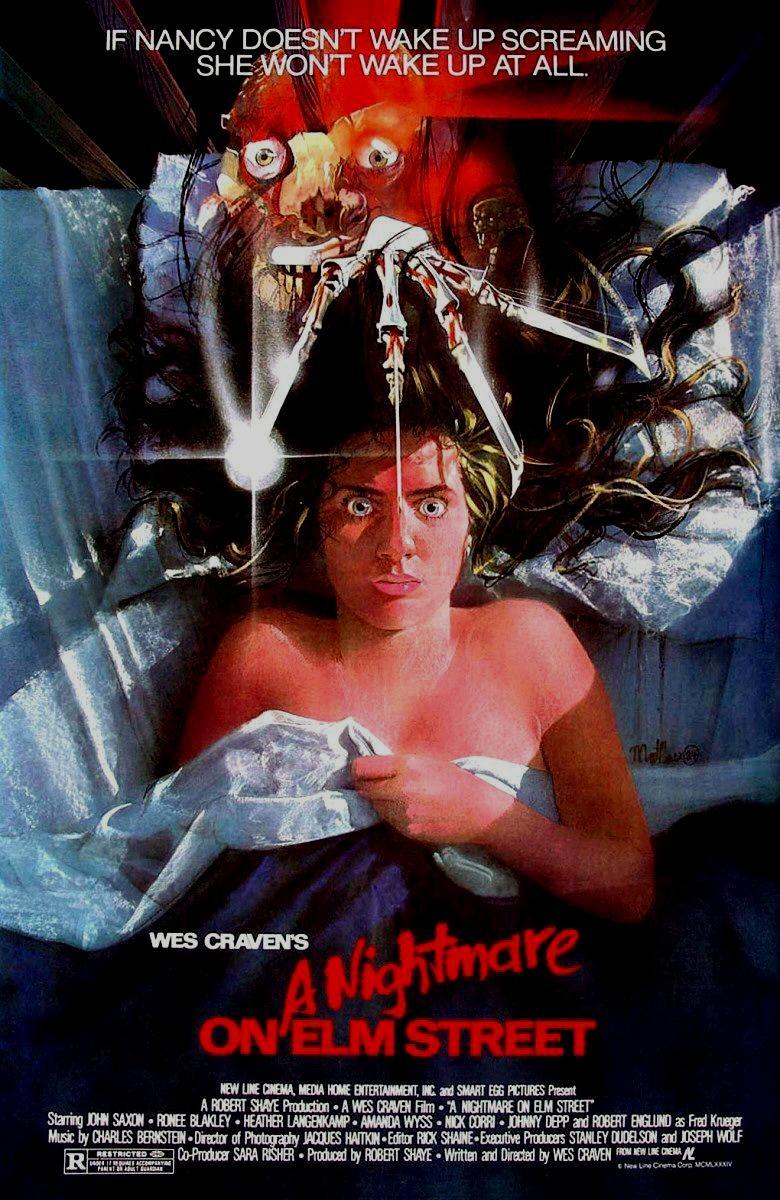
Wes Craven is one of these directors. Because he is so good at pushing the boundaries, he occasionally creates films that are too disturbing to be entertaining in any way. The paramount example of this kind of filmmaking is The Last House on the Left, a film so gruesome and so disturbing that it is barely watchable. Its intense horror comes from its realism. There is no doubt that what is depicted on the screen has happened before and will happen again. As a window into the darkness of man’s soul it is terrifyingly effective, but it may very well push the boundaries too far, making it less valuable as a film given that most people cannot make it through the entire movie without walking out in disgust. In The Hills Have Eyes, Craven steps back from the precipice and gives us an effort that is sufficiently removed from reality as to be terrifying while still watchable and enjoyable. This film might well have been remembered as Craven’s best. But then he had a dream that turned into a nightmare, and he made that nightmare into one of the scariest films of all time.
A Nightmare on Elm Street takes two simple premises and puts them together to create the greatest horror story ever told. The first is the bogeyman, old as time immemorial, the personification of the dark uncertainty that haunts our childhood, lurking behind every closet door and under every bed. Secondly, dreams, the palette of the mind where we are often lost in a fantasy world where anything can and does happen. Normally dreams are mere fragments, but sometimes they are so real and so vivid as to be barely distinguishable from reality. What if, in those instances, we were to die, caught up by the bogeyman who exists only in such a world of fantasy? Might that death translate into the real world as well?
Wes Craven took this idea and ran with it, combining the faceless killing machine of films like Halloween, combined it with the bogeyman of lore, and created Freddy Kruger. The spirit of a horribly burned dead child murderer, Freddy inhabits the dreams of the children of Springwood, drawing his strength from their fear. Freddy has a lot of Krug Stillo from Last House on the Left in him, but with a sly humor that cuts the edge off of the dark evil of that character’s persona.
The story begins with Nancy (Heather Langenkamp), Glen (Johnny Depp) Tina (Amanda Wyss), and Rod (Nick Corri), four teenage high school friends, discovering that they are all afflicted with strangely similar nightmares. When one of them is murdered in bizarre and grizzly fashion and another is accused of the slaying, they begin to explore the origins of that which hunts them, in the hopes that by doing so they might discover some weakness of Freddy’s that they can exploit.
While there are no Oscar worthy performances in A Nightmare on Elm Street, the young actors acquit themselves quite admirably. They each inhabit their characters with ease, helping us to experience their fear and confusion. Heather Langenkamp, who would go on to appear in two Nightmare sequels, is thoroughly convincing as a young teenage struggling to survive another night while simultaneously convincing the world around her that she is not insane. Johnny Depp, appearing in his first motion picture, shows flashes of the brilliance that would come to define his career while playing Langenkamp’s boyfriend and sidekick, Glen. Finally, Robert Englund gives a career defining performance as psychotically twisted killer, Freddy Kruger. By adding a personality to Freddy, Englund redefined a genre that had been dominated by the silent, robot like killer.
The atmosphere of the movie is superbly developed. The dream sequences are appropriately surreal, filled with obscuring mists and eerie non-sequitors such as animals in places they should not be, people who act as though they are possessed, and school stairways that lead to factory boiler rooms. Moreover, we are never quite sure where dreams end and the real world begins. This blurring of reality even opens the possibility that the entire film is a dream, an eternal nightmare locked in the insanity of Nancy’s mind.
I cannot recommend A Nightmare on Elm Street with too much zeal. It is one of the few movies that truly terrified me when I first saw it, and it still holds the power to frighten me to this day. In the case of most horror movies, the evil that is personified on screen can be easily avoided. Don’t go in the old run down house. Don’t read the Latin words in the old musty book. Don’t travel to Transylvania. But we must all sleep, and in doing so, we put ourselves at the mercy of forces we cannot control and whose power, in the dream realm at least, is absolute.
I promise not to spam you, and I'll never give away your information. This is only for BIG announcements like new book releases or Pulitzer prizes won. That sort of thing. Click the book to sign up!





 Beware The Shadows